Science from the end of the world
Beagle Channel
Acidification and hypoxia in the southern ocean
A binational scientific project between Argentina and Chile studying how climate change is transforming one of the most singular marine ecosystems on the planet: the meeting point of the Atlantic and the Pacific.
- 2019
- Researching since
- 2
- Collaborating countries
- +4
- Contributing countries
- +30
- Researchers
- +30
- Published papers
Who makes it possible
- CADIC · CONICET
- CONICET
- Fundación Príncipe Alberto II de Mónaco
- Pampa Azul
- Centro IDEAL
- INIDEP
- Prefectura Naval Argentina


The project
An ocean changing its chemistry
When carbon dioxide enters the sea, it reacts with the water and acidifies it. This occurs naturally, and seawater has the capacity to regulate this impact. However, because of the excess carbon dioxide released into the atmosphere by human activity, such as the burning of fossil fuels, that regulating capacity is not enough to maintain the balance. The result is an acidification of the water, which affects a range of marine organisms and the ecosystem as a whole. In high-latitude coastal waters such as the Beagle Channel the process is aggravated, since the accelerated melting of glaciers and the inflow of fresh water further reduce the capacity to regulate acidity that seawater naturally has.
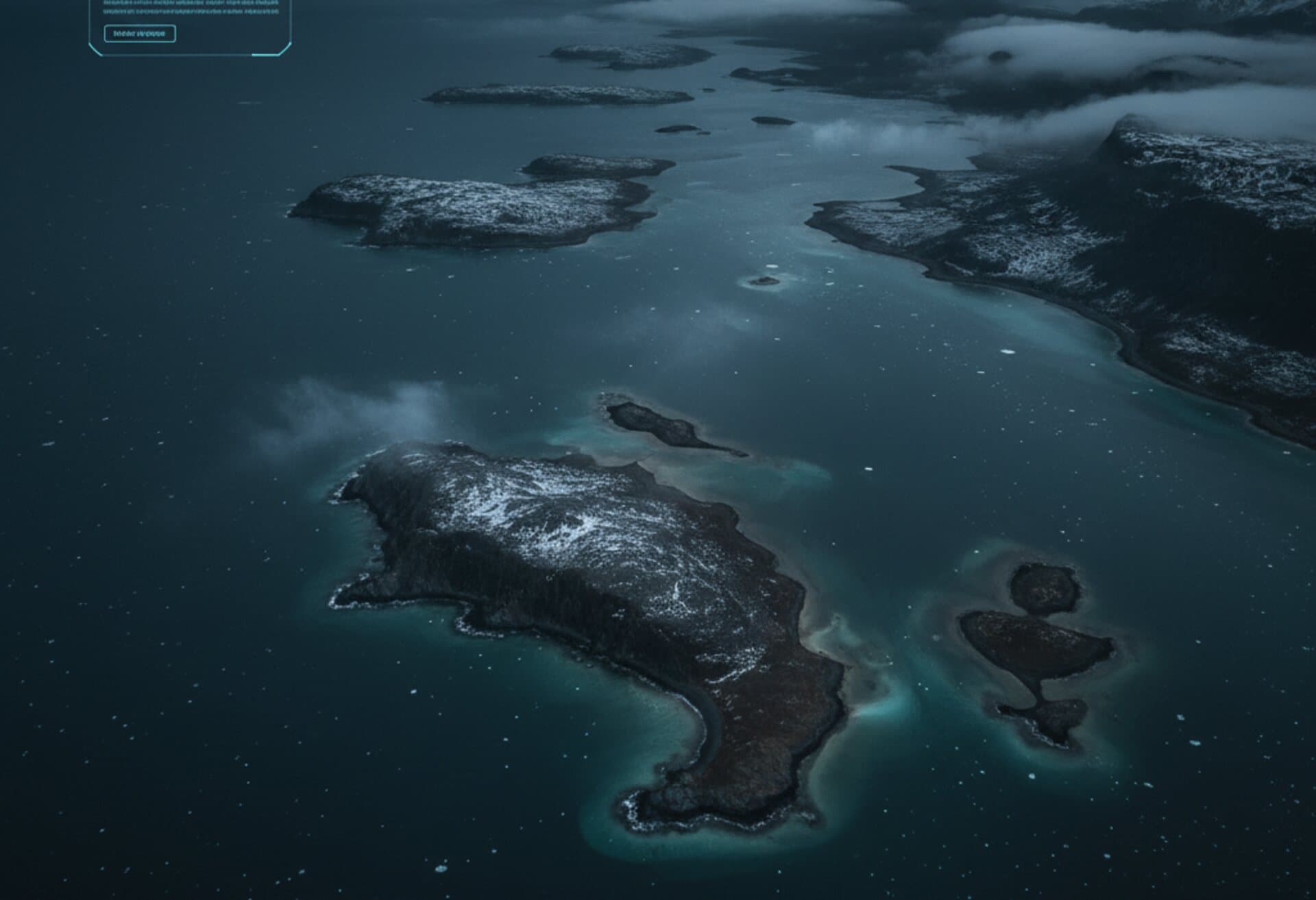
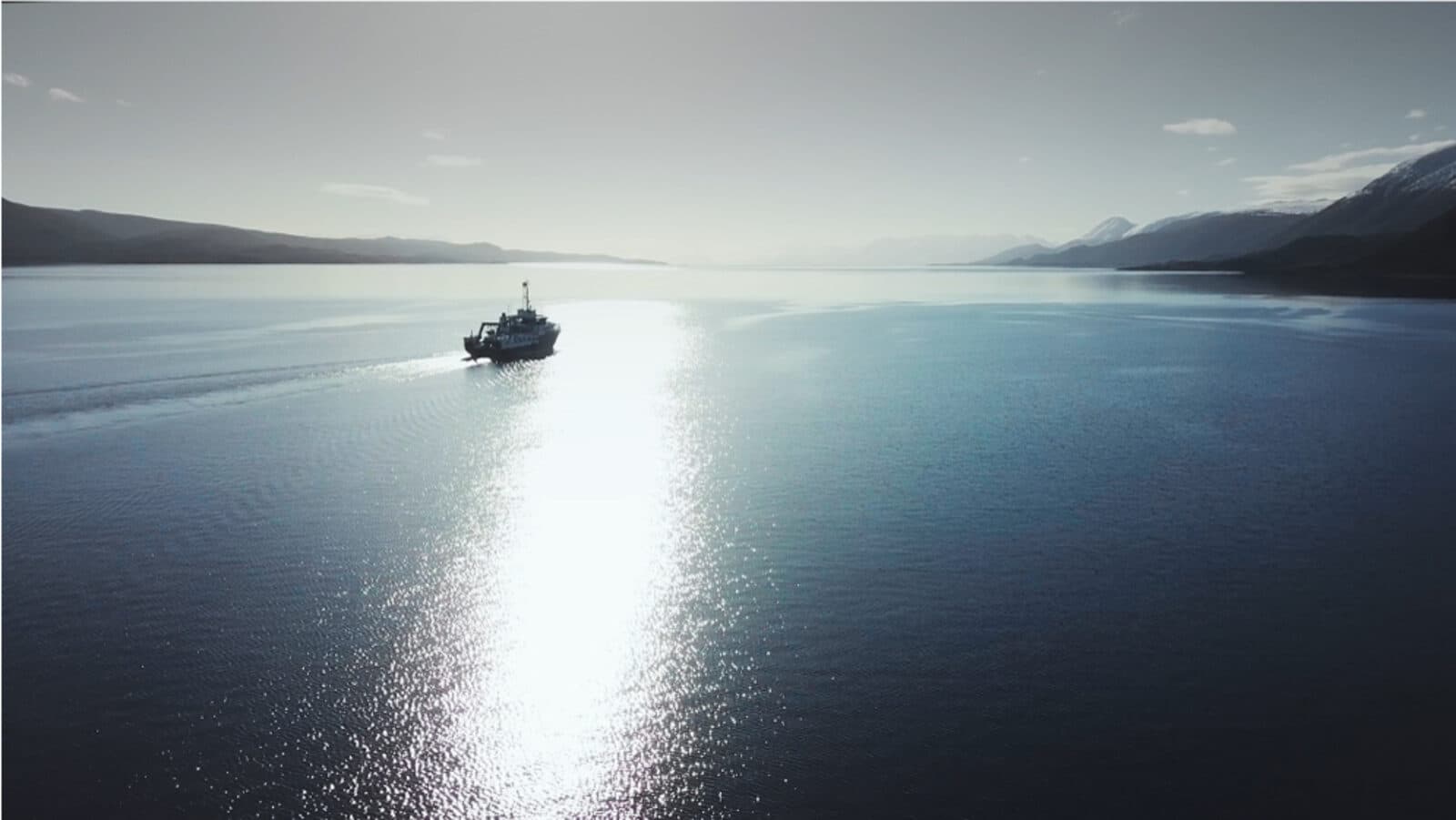
The Beagle Channel is an exceptional natural laboratory. It is the marine ecosystem most closely connected to the terrestrial environment in the Argentine Sea, a significant carbon sink and a key meeting point between the Pacific and Atlantic oceans. It is also one of the areas most sensitive to climate change on the planet, and part of the territory and cultural legacy of the indigenous peoples of Chile and Argentina.
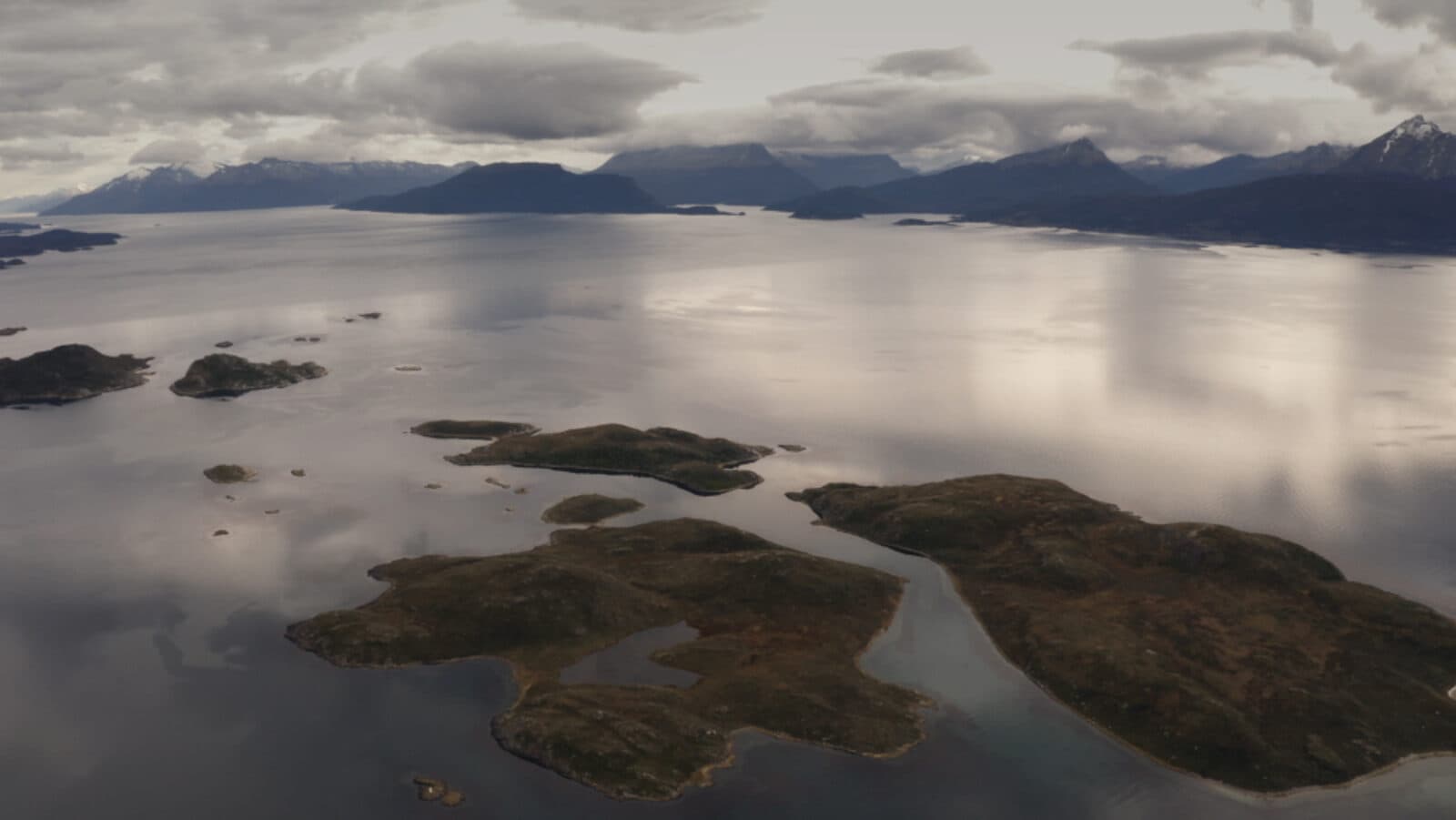
View of the Beagle Channel, the marine ecosystem most connected to the terrestrial environment.
Objectives
- 01
Understand the process
Study acidification and hypoxia in high-latitude coastal waters.
- 02
Measure the impact
Determine how acidification affects the biology of the key species of economic and ecological importance in the area.
- 03
Monitor for the long term
Establish sustained monitoring over time, so the ecosystem can be tracked year after year.
- 04
Bring two countries together
Strengthen scientific collaboration between Argentina and Chile over a shared ecosystem.
Principal investigator
Dr. Gustavo Ferreyra
CADIC · CONICET
The campaigns
Science on board, in real time
Periodically, an interdisciplinary team boards the oceanographic launch Shenu, of the Centro Austral de Investigaciones Científicas (CADIC-CONICET), to collect water samples at different depths, measure the channel's physical and chemical properties and study the plankton that sustains the whole web of marine life.
- ◆Water sampling at different depths
- ◆Measuring acidity, oxygen and temperature
- ◆Studying plankton and carbon fluxes
- ◆Continuous observation with moored instruments
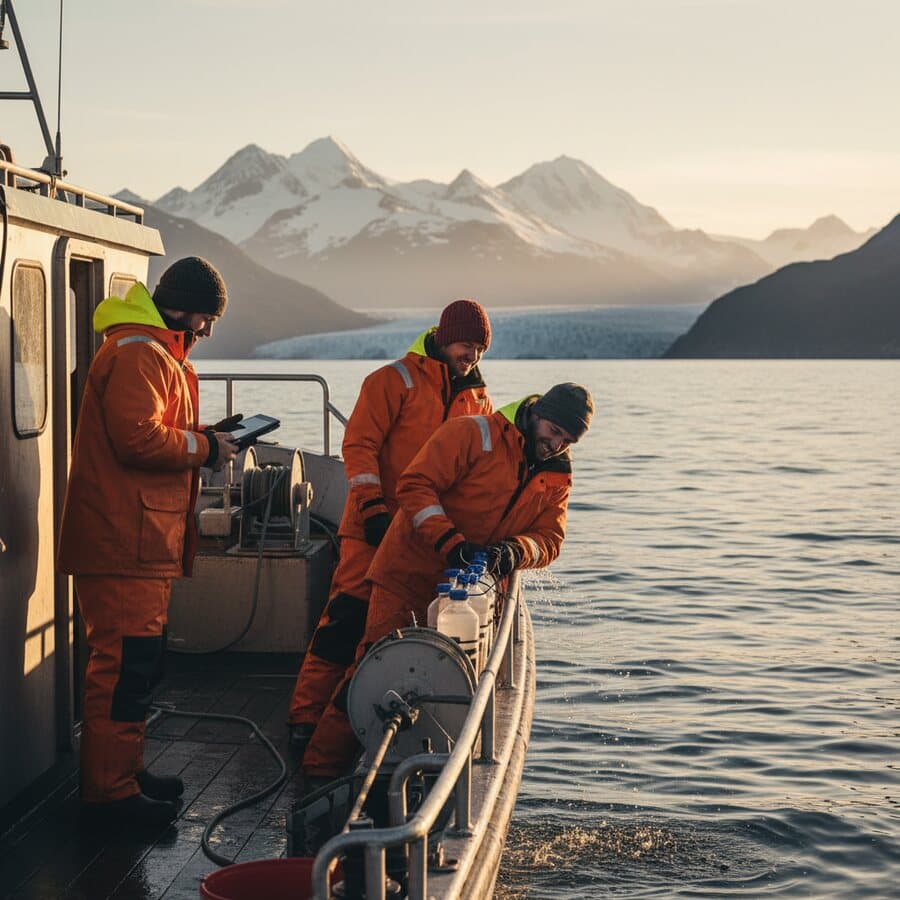
Coming soon: follow us live
During the upcoming campaigns we will broadcast from the vessel: the work on deck, the sampling and conversations with the scientific team, live from the Beagle Channel.
In the field
Fieldwork
The campaigns carried out so far used as platforms the research vessel BIPO Víctor Angelescu of the National Institute for Fisheries Research and Development (INIDEP), the motor sailer Bernardo Houssay of the Argentine Naval Prefecture (PNA) and the oceanographic launch Shenu of CADIC-CONICET.
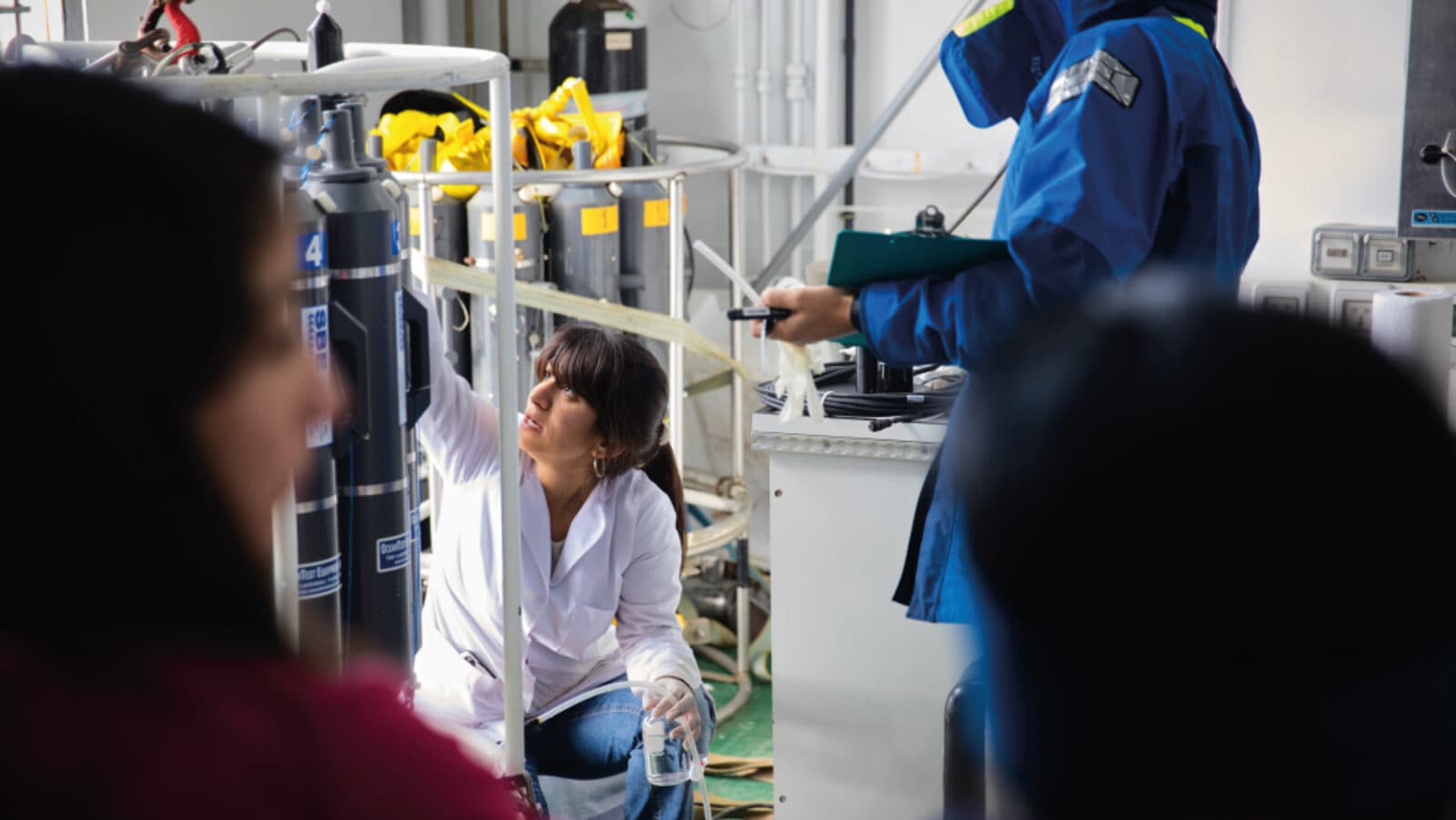
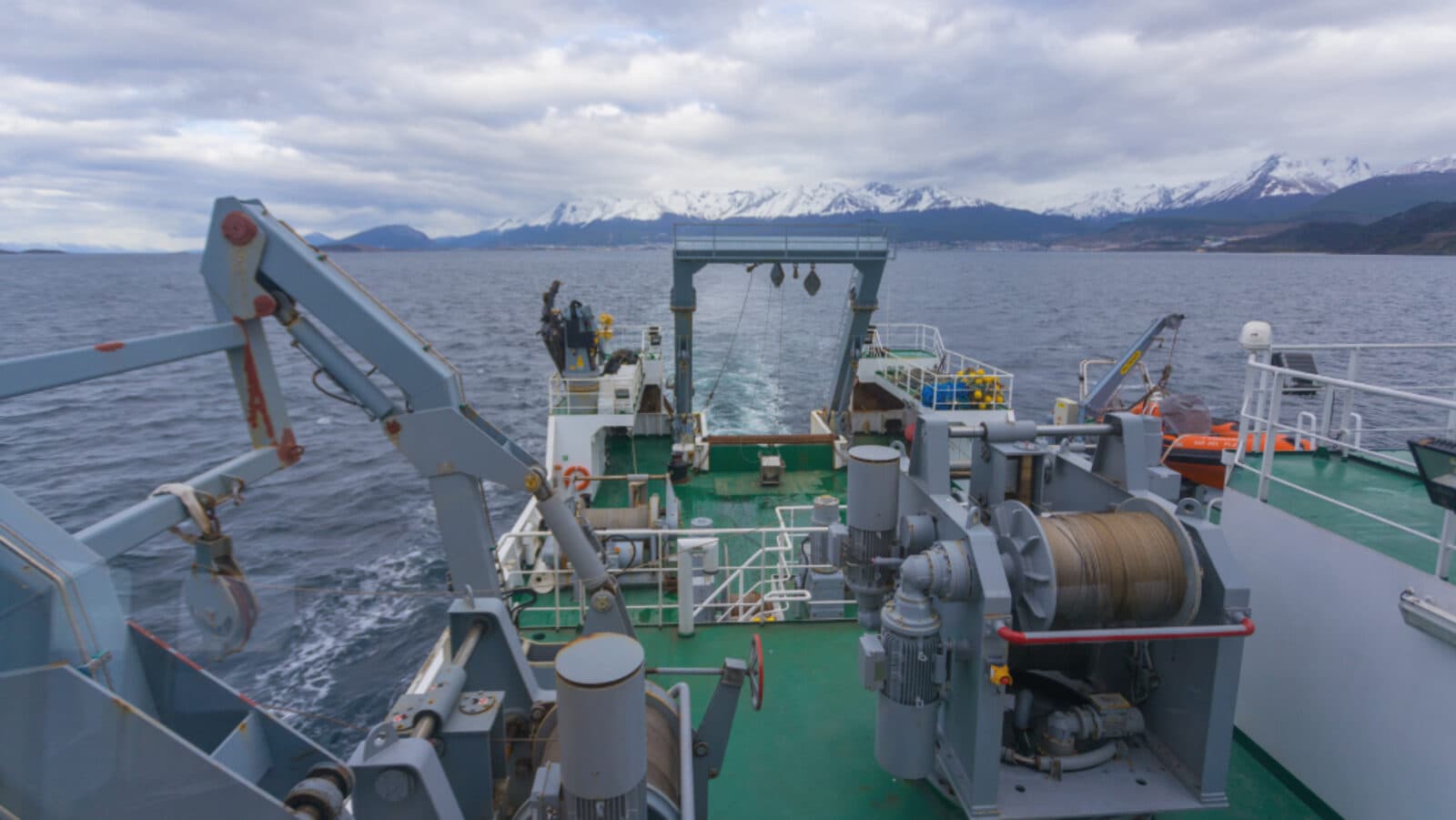
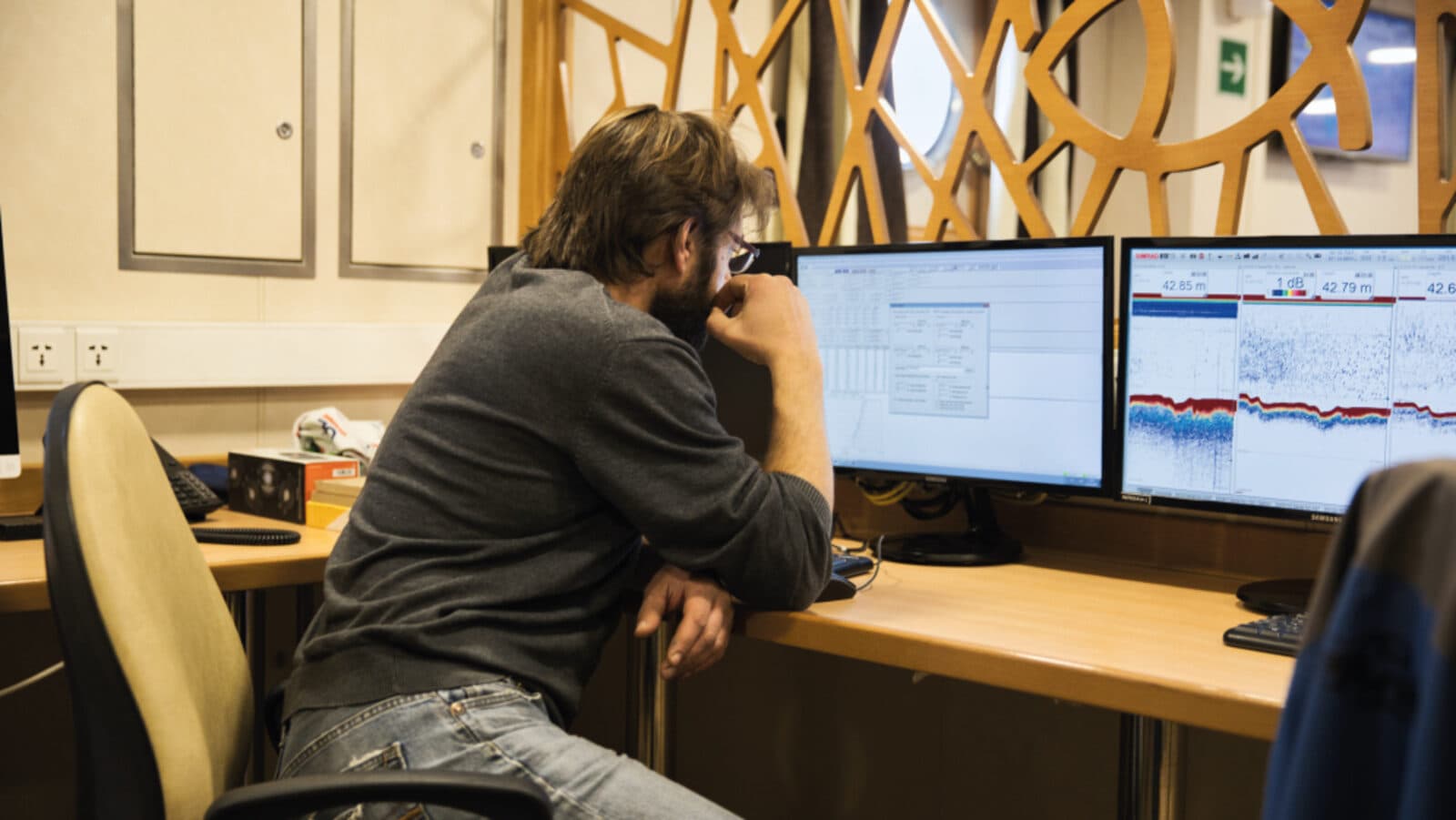
Photos: courtesy of CONICET Documental
This site is just beginning
It will grow along with the campaign
We are publishing this first version to accompany the start of the season. As the campaigns progress, the site will add new material, data and sections.
- Coming soon
Live cameras and broadcasts
During campaign periods there will be broadcasts from the vessel and live cameras.
Campaign logbook
Chronicles, photos and videos from every trip into the channel throughout the season.
Publications repository
The project's scientific papers, available to browse and download.
Map of sampling stations
The sampling areas of the channel and the information linked to each campaign.
The campaign season
Trips into the Beagle Channel
The project sails into the channel several times a year, in association with the observations of Argentina's Marine Observation Network (ROMA), run by CONICET. Every campaign repeats the same stations and the same measurements, so that what is recorded today can be compared with the previous trip and with the ones to come. These are the most recent.
At each station the vessel stops and the probe goes over the side: it measures carbon dioxide concentration (the driver of acidification), temperature, salinity, phytoplankton chlorophyll, dissolved oxygen and how far light penetrates the water. Everything is recorded on board, on the spot.
- ROMA 44 campaign
- 4 and 5 August 2026 · Oceanographic launch Shenu
- Regular transects of the Argentine Marine Observation Network in the Beagle Channel.
- Campaign aboard the Houssay
- November 2025 · Motor sailer Bernardo Houssay
- Oceanography, geology and seismics, with the crew of the Argentine Naval Prefecture.
- First binational campaign
- 9 to 15 November 2019 · BIPO Víctor Angelescu
- Argentina and Chile aboard the INIDEP vessel, on the first joint trip into the channel.
Photos from the campaigns
Drag to browse the photos. Tap one to see it larger.
Photos: CADIC · CONICET team, 2019-2026 campaigns.
Who makes it possible
A shared effort
The project is carried out within the Bilateral Commission for Cooperation in Southern Marine Scientific Research, promoted by the Ministries of Foreign Affairs of Argentina and Chile.
With the support and funding of
Prince Albert II of Monaco Foundation
Lead funder of the project · Supporting the project since 2019
Since 2019 the Prince Albert II of Monaco Foundation has supported the OCAH-Beagle project, dedicated to studying the impacts of ocean acidification and hypoxia on high-latitude coastal marine ecosystems. Its commitment to ocean protection makes the research carried out in the Beagle Channel possible.
Funded by
- FPA2 ↗Prince Albert II of Monaco Foundation
- Pampa Azul ↗Ministerio de Ciencia, Tecnología e Innovación
- CONICET ↗Consejo Nacional de Investigaciones Científicas y Técnicas
With the participation of
Frequently asked questions
What does the project study?
How ocean acidification and hypoxia (the lack of oxygen in deeper layers) affect the Beagle Channel ecosystem, and what that means for the species of economic value in the area, such as fish, bivalves and king crab.
Why does the ocean acidify?
When carbon dioxide enters the sea it reacts with the water and acidifies it. This occurs naturally, and seawater has the capacity to regulate this impact. However, because of the excess carbon dioxide released into the atmosphere by human activity, that regulating capacity is insufficient, and the water acidifies, affecting a range of organisms and the ecosystem as a whole. In high-latitude coastal waters such as the Beagle Channel, the process is aggravated, since the accelerated melting of glaciers and the inflow of fresh water reduce the buffering capacity of seawater.
What is measured on each campaign?
At each station a probe goes over the side and records, throughout the water column, carbon dioxide concentration, temperature, salinity, phytoplankton chlorophyll, dissolved oxygen and light penetration. The data is logged on board, on the spot.
How often do they go out?
Several times a year. Each campaign repeats the same stations and the same measurements, so the data from one trip can be compared with the previous and the next one.
What is the ROMA network?
Argentina's Marine Observation Network: a system of periodic monitoring transects at sea. The project's campaigns in the Beagle Channel are carried out in association with that network's observations.
Who funds the project?
The Prince Albert II of Monaco Foundation is the lead funder and has supported it since 2019. CONICET and Argentina's Ministry of Science, Technology and Innovation join in through the Pampa Azul initiative.
Contact
Want to know more?
If you are interested in the project, you are a journalist, you work in the sector or you would like to join as a student or intern, get in touch.
Get in touchUshuaia, Tierra del Fuego, Argentina